
Direct Summary: While site-mixed concrete is historically common for small residential foundations, computerized Ready Mix Concrete (RMC) from a dedicated batching plant delivers vastly superior compression strength, strict slump retention, and zero raw material wastage, making it the most cost-effective and structurally secure option for modern Trichy builders.
1. Compressive Strength and Material Consistency
In site-mixing, aggregates, sand, cement, and water are measured manually using nominal volumes (e.g. iron pans or cement bags). This method depends highly on the skill of local laborers, resulting in inconsistent batches. Variations in sand moisture content are rarely accounted for, which alters the water-cement ratio and directly compromises strength.
In contrast, Rockfort Ready Mix Concrete utilizes computerized batching scales at our Gundur SIDCO plant. Every component—sand, 12mm/20mm coarse aggregate, cement, water, and chemical admixtures—is weighed to the exact kilogram. We perform automatic moisture compensation checks on sand before batching, ensuring that the target water-cement ratio is met for every load.
2. Wastage and Site Space Savings
Traditional site-mixing requires raw materials to be dumped on-site. In Trichy, storing sand and aggregate on busy streets often leads to material loss during rainfall, contamination from soil, blockages of municipal drains, and local traffic fines. Furthermore, aggregate leftover wastage typically ranges between 10% to 15%.
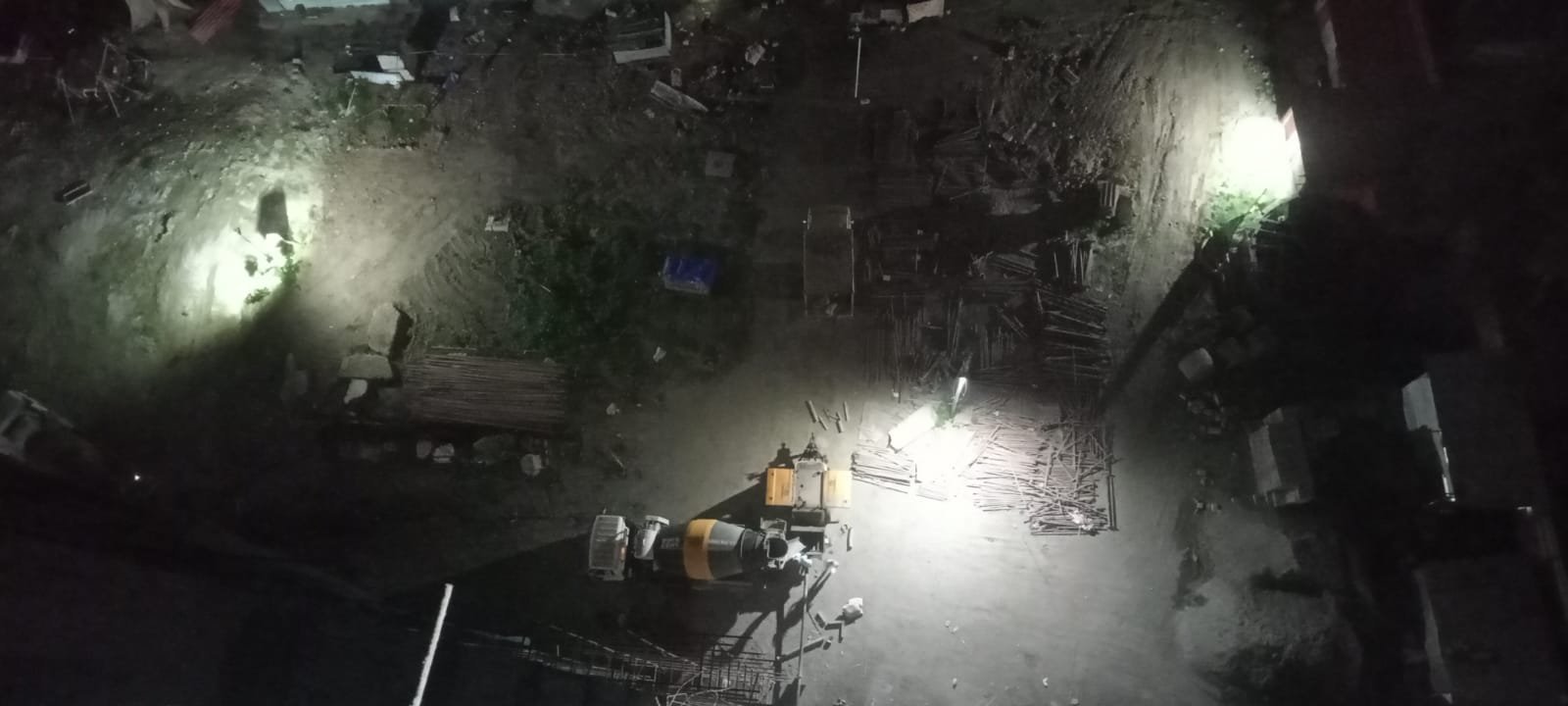
RMC is delivered in transit mixers directly to the pour location, requiring zero material storage space on-site. Builders pay only for the exact cubic volume ordered, removing the logistical headache of cleanups and avoiding municipal public block fines.
3. Quantitative Cost & Efficiency Comparison
Below is a comparative breakdown of key metrics based on standard residential slab castings in Trichy:
| Feature Metric | Site-Mixed Concrete (Nominal) | Rockfort Ready Mix Concrete (RMC) |
|---|---|---|
| Consistency Control | Manual nominal mix, prone to human error | Computer-controlled weight batching (IS 456) |
| Typical Wastage | 10% - 15% (due to wind, rain, and soil mixing) | Less than 1% (exact cubic volume delivered) |
| Pour Speed / Time | 20 - 30 hours for standard 1000 sq.ft slab | 3 - 4 hours (using transit mixers & concrete pumps) |
| Quality Verification | Cube specimens are rarely cast or tested | Cubes cast on-site; laboratory crush tests |
| Site Space Requirement | High (requires storage for cement, sand, gravel) | Zero space (poured directly from transit mixer) |
4. Pour Pacing and Labor Logistics
A manual site-pour for a 1,200 sq.ft roof slab requires hiring a concrete mixer machine, hoisting equipment, and a labor crew of 15 to 20 workers. The process often stretches into long hours, increasing labor costs and creating "cold joints" where concrete poured hours apart fails to bond correctly. This can lead to roof leakage issues later on.
Using Rockfort RMC, the same 1,200 sq.ft roof slab can be poured continuously in under 3 hours using a concrete boom pump. A continuous pour eliminates the danger of cold joints, minimizes raw labor oversight, and allows structural engineers to complete the project on time.
5. Expert Verdict for Trichy Projects
If your construction project involves critical structural load-bearing elements (such as pile foundations, columns, beams, or suspended roof slabs), choosing computerized RMC is essential. For non-structural components like garden pathways or basic compound walls, nominal site-mixing remains an alternative.